The U.S. Constitution and
the Great Law of Peace
only a few left: $50
OUT OF PRINT
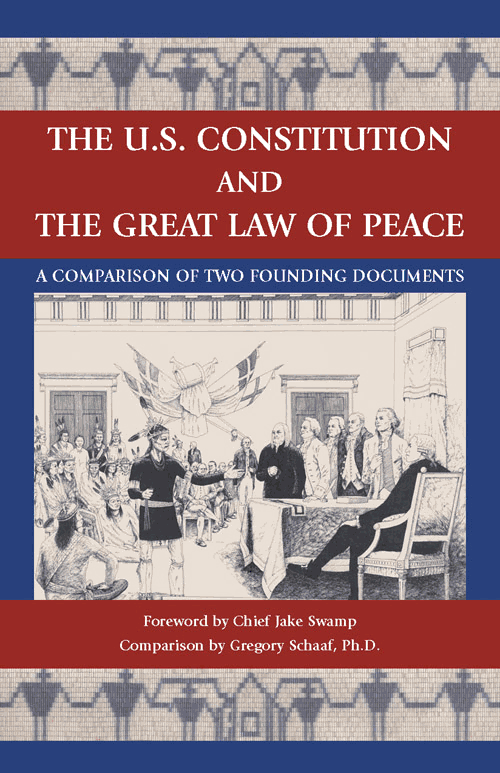
"U.S. Constitution and the Great Law of Peace: A Comparison of Two Founding Documents" by Mohawk Chief Jake Swamp and Dr. Gregory Schaaf (CIAC Press, 2004) explores the relationship between the U.S. Constitution and the Iroquois Great Law of Peace, emphasizing the impact of Native American ideals on American democracy. Rather than solely relying on Greek influences, figures like Franklin and Jefferson incorporated Iroquois symbols, transforming the "Tree of Peace" into the "Tree of Liberty" and the "Eagle-who-sees-far" into the "American Eagle." The five arrows representing the Iroquois nations evolved into thirteen arrows held by the American Eagle on the Great Seal of the United States (as seen on the reverse of the U. $1 bill). Notably, the Iroquois tripartite governance system predates the American three-part governmental structure by several centuries.
Additionally in 1988, this book's text was presented to the U.S. Senate Select Committee for Indian Affairs during Dr. Schaaf's testimony supporting "Senate Concurrent Resolution 76." The resolution, which passed unanimously, marked the first official recognition of the Iroquois influence on the U.S. Constitution and reaffirmed the government-to-government relationship between Indian tribes and the U.S., signifying a crucial acknowledgment of the Iroquois Confederacy's role in shaping American democracy (Congressional Record, September 16, 1987).